How Finsway works
How Finsway plans an incoming payment
First cover the work. Then plan what remains. Record an incoming payment, account for its direct costs and decide what the remaining margin is for.
Fictional worked example
Both planning stages, in one complete view.
The same €12,500 recorded payment is used throughout: €4,200 covers direct project costs in Stage 1, leaving €8,300 to plan in Stage 2.
Stage 1
Cover the work.
Account for the direct costs connected to producing this work.Recorded payment
1 paymentIncoming business payment€12,500
Direct project costs
2 planned purposesContractor support€3,200
Project tools€1,000
Total direct project costs€4,200
- Recorded payment
- €12,500
- Direct project costs
- €4,200
- Remaining margin
- €8,300
Stage 2
Plan what remains.
Give the €8,300 remaining margin a direction across the business.Remaining margin
From Stage 1Amount entering Stage 2€8,300
Planned purposes
5 purposesTax€1,660
Owner pay€3,320
Operations€1,660
Reserve€830
Goals€0
Total planned€7,470
- Remaining margin
- €8,300
- Total planned
- €7,470
- Still unassigned
- €830
Finsway records the plan. It does not move the money.
Product view
What does an incoming-payment plan look like in Finsway?
Finsway keeps the money recorded by the business and its upcoming planned commitments visible in the same planning system.
-
1
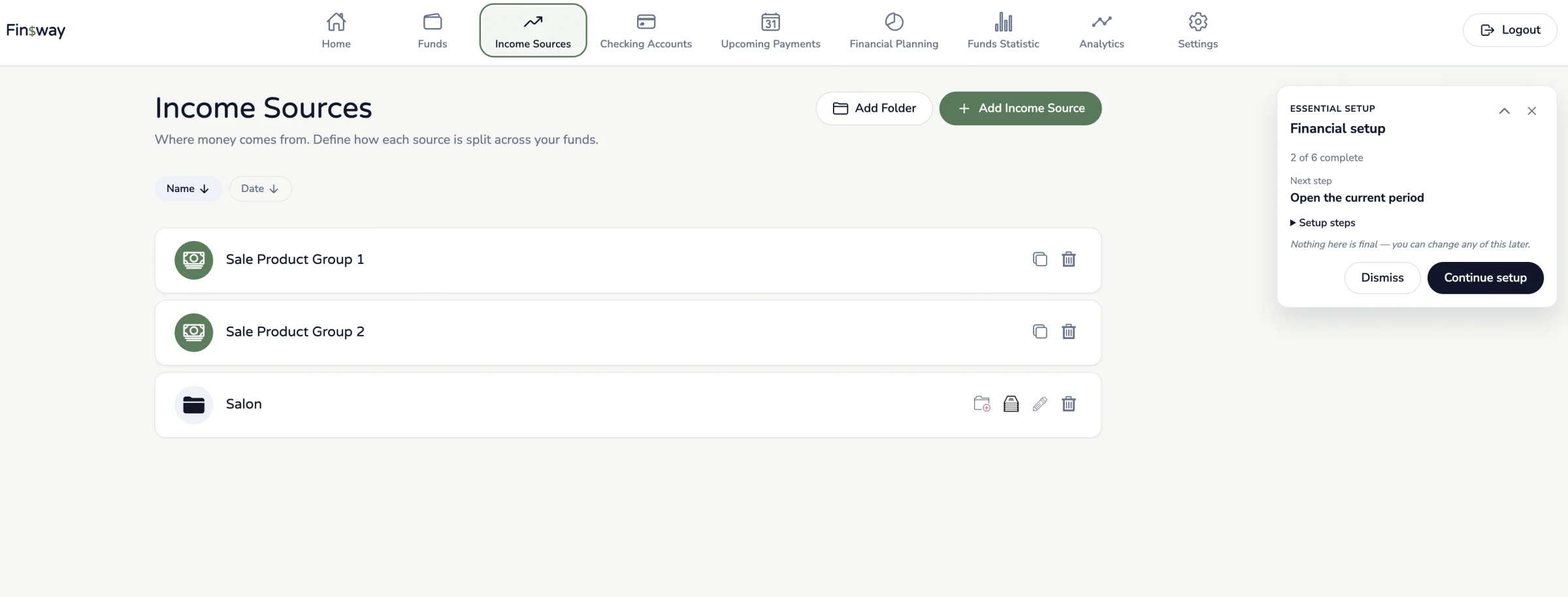
Record where the money came from.
Income sources keep incoming business payments identifiable without importing transactions from a bank.
-
2
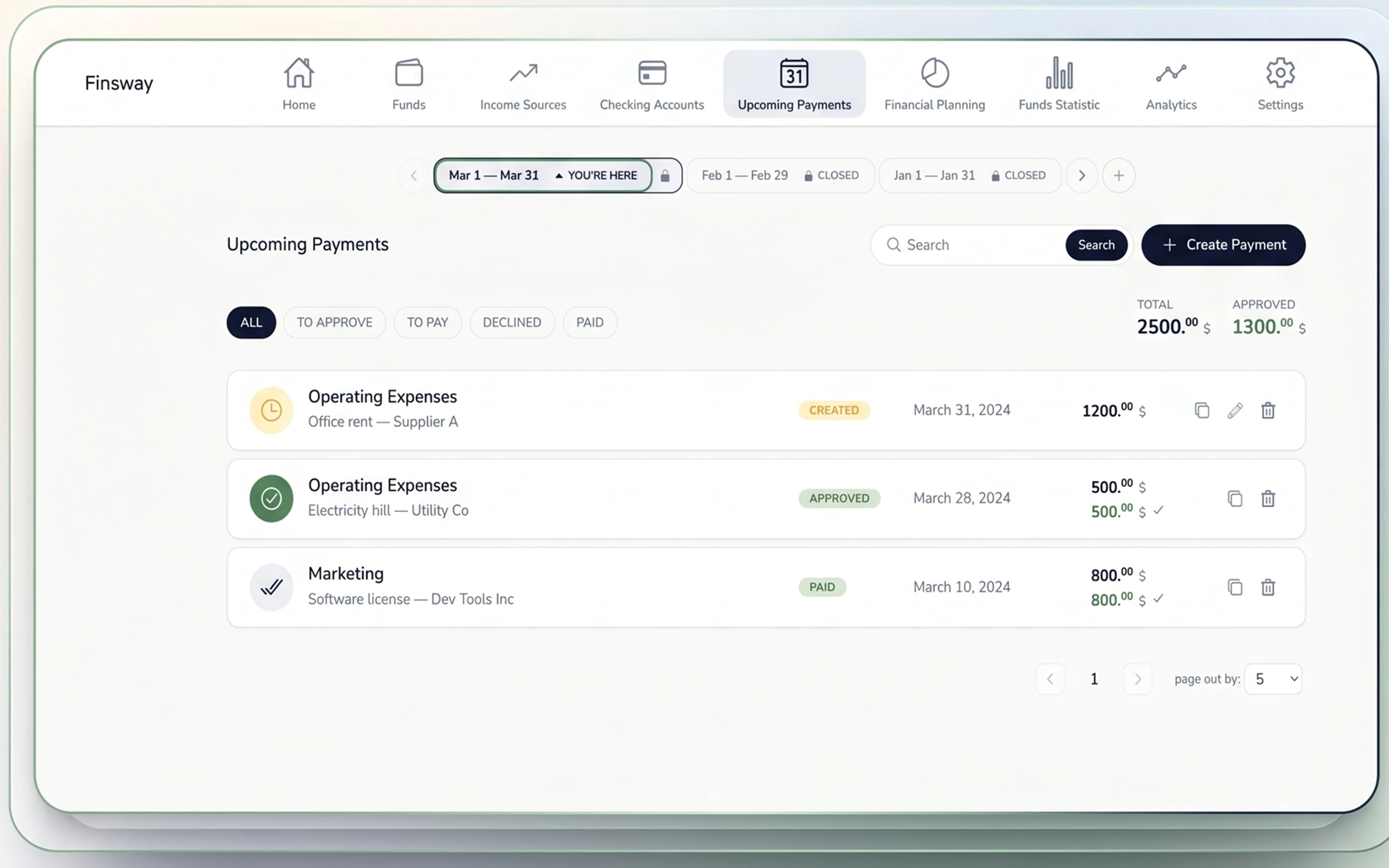
Keep upcoming commitments visible.
Planned payments remain visible for review; Finsway does not execute or verify the real-world payment.