Cover direct costs
Identify the costs created by earning the revenue.

PRIVATE MONEY PLANNING FOR SMALL BUSINESSES
Finsway turns incoming money into a clear plan for direct costs, owner pay, taxes, reserves and upcoming commitments-without connecting your bank.
One payment. Several purposes.
You decide the structure. Finsway keeps it visible.
EARLY BETA
Explore a clearer way to plan business money and help us build Finsway around real business needs.
Get early accessNo signup, no payment details. Free during beta.
What you can explore
Finsway is still evolving, and your experience will help shape the product.
Beta features may change as Finsway develops.
A balance is only the starting point
Some of the money you can see may already be needed for suppliers, salaries, taxes, planned payments or future goals. Until those purposes are separated, it is difficult to see what genuinely remains.
One balance can contain many promises.
Finsway turns those promises into a plan you can see and review.
The planning principle
Cover the costs created by the revenue, then give what remains a clear purpose.
Identify the costs created by earning the revenue.
Give what remains a purpose across taxes, owner pay, operations, reserves and goals.
Recorded revenue − direct costs = remaining margin
You make the decisions. Finsway keeps the plan visible.
How it works
Build the plan in four deliberate steps. Nothing moves unless you move it.
Add the revenue or other amount you want to plan.
Account for materials, supplier costs, project costs or other commitments directly connected to that revenue.
Plan what remains across taxes, owner pay, operations, reserves and goals.
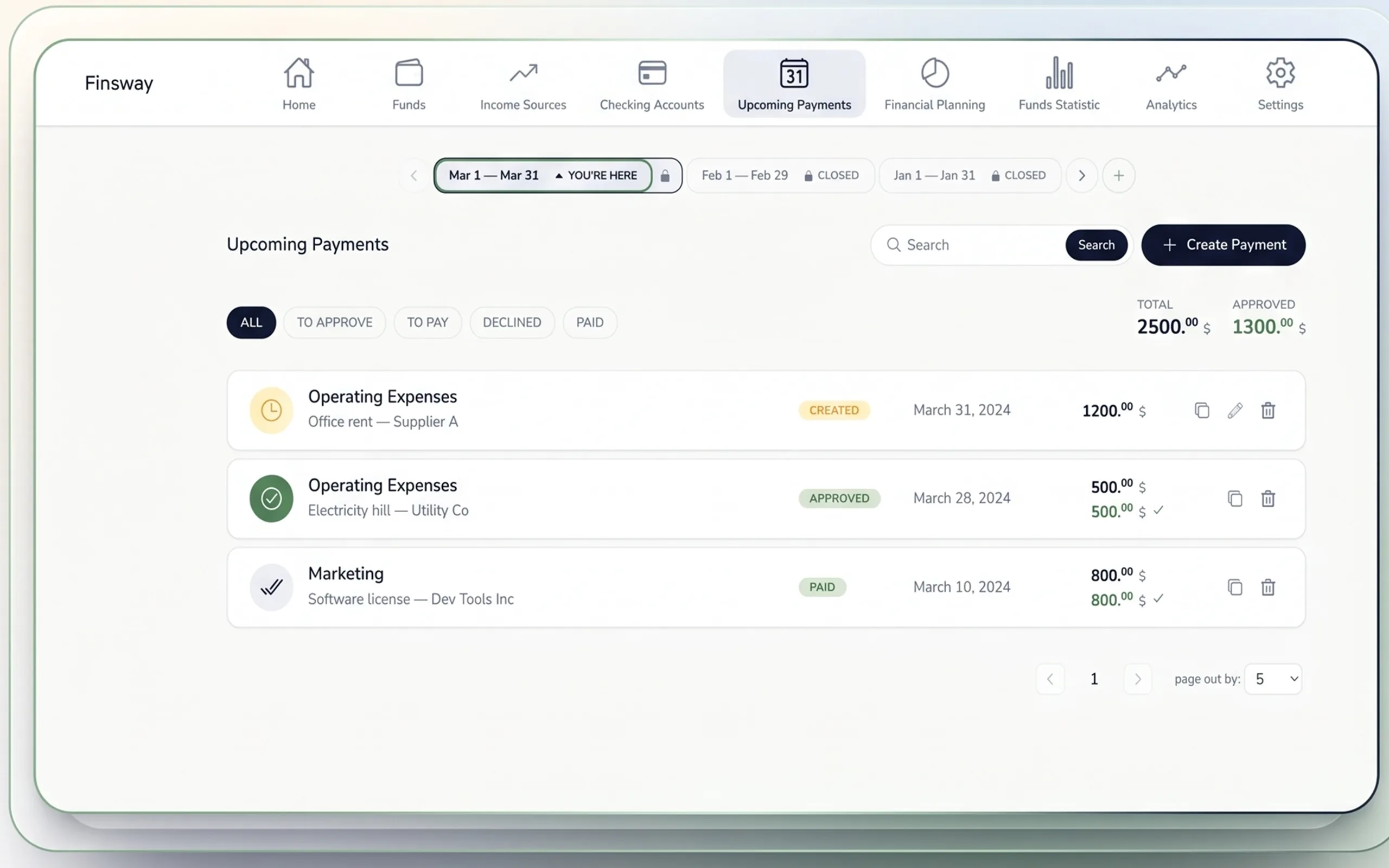
Prepare future commitments before they affect the amount available.
Planning tools
Everything stays connected, from the source of the money to its planned destination.
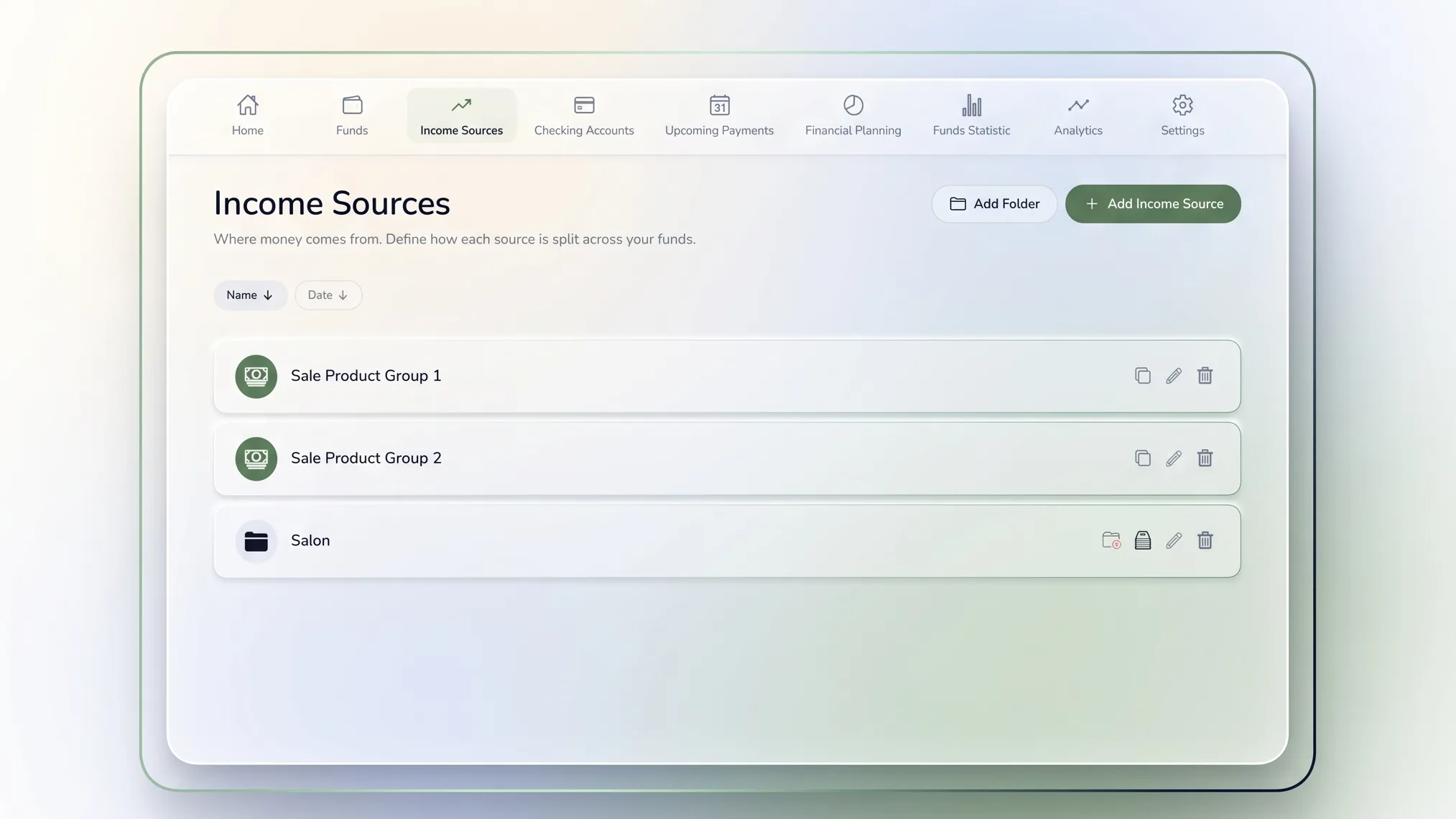
See where available money came from before deciding where it should go.
Cover direct costs first, then plan the remaining margin.
Create clear destinations for taxes, pay, operations, reserves, and goals.
Keep upcoming commitments visible before they affect available money.
Plan weekly, monthly or around the rhythm of your business.
Choose what enters Finsway. No bank sync or automatic transaction feed is required.
Finsway is for planning. It does not move money, replace accounting, or provide financial advice.
Private by design
You decide what enters Finsway. No bank connection, transaction import or payment access is required.
Who it is for
Especially useful when revenue arrives at different times and one available balance must cover several priorities.
Separate delivery costs from the margin that supports the business.
Plan irregular project revenue across contractors, pay, taxes and future work.
Keep supplier commitments, payroll, operating funds and reserves visible in one plan.
Give every collected payment a purpose before spending begins.
For the business you’re building
A lasting business is built through everyday decisions-what to cover now, what to protect next and what to keep building toward. Finsway keeps those priorities visible in one clear plan.
One payment can support today’s work and tomorrow’s direction.
Start planningFAQ
Clear answers about what Finsway does-and what it deliberately leaves under your control.
No. You manually enter the amounts you want to plan.
No. Finsway does not hold, transfer, or initiate movement of funds.
No. Finsway supports forward-looking money planning and does not replace formal bookkeeping, accounting records, or tax filing.
Only the planning information you choose to use: available money, income sources, direct costs, fund allocations, and planned payments.
Yes. Your priorities and circumstances can change, so the plan can change with them.
It is the amount left after direct costs are separated from collected money. That remainder can then be allocated across the purposes you choose.
Yes. Finsway supports flexible periods so your plan can follow the rhythm of your business.
Planned shows what you intend to set aside or pay. Distributed means the amount has been assigned within the plan. Neither action moves money in your bank account.
Start with the money you have
Record it, cover the direct costs and decide what the remaining margin should do next.
No bank connection required.